
http://www.youtube.coIn addition, something to gladden the heart of any Dane, or anyone married to one. Also from Ole Bull’s collection a solo violin piece, very much in his spirit, and with a scordatura (retuning), which he would like. I have become fascinated with the work of Anders Heyerdahl (1832-1918), who I first encountered through a transcription that he made of Ole Bull improvising. Heyerdahl was a violinist, composer and collector of folk musik. The solo work which I found in the Lysoen collection was Nissespel. ‘Nisser’ as every Danish child does, are the playful house elves who must be humoured and honoured at Christmas. Heyerdahl’s title page includes one playing the violin for what almost appears to be a Nisser-witches dance-there are echoes of Paganini here. Anders Heyerdahl – ‘Nissespel’ Op 11 (First modern Performance)-workshop recording-rip from video[audio mp3="https://www.sheppardskaerved.com/wp-content/uploads/2013/05/Nissespell.mp3] (Scordatura AEACsharp) Peter Sheppard Skaerved-Violin (Harry Green 2013) Royal Academy of Music Museum ‘Soundbox’ May 2013 The title page of Anders Heyerdahl’s ‘Nisserspel’ This is only a beginning, but this piece paired with a text by Ole Bull’s great friend, Aasmund Olavsson Vinje, a poem about the Nisse ‘som spila pa Fela (fiddle) og hoyra kann’. In 1857, Vinje had noted about Bull that he was a ‘marvellously unhappy man…as far as I can tell, he is not responsible for most of it’ (thanks to Einar Haugen for the quote-from his ‘Ole Bull: Norway’s Romantic Musician and Cosmopolitan Patriot’). 21st Ma 2013:Now this is what it’s all about. A regular audience member at SOUNDBOX, Harry Green, has been making a violin for 6 years. Today, he brought it in, and I was able to use it to give the modern premiere of Anders Heyerdahl’s ‘Nissespel’. That’s what’s all about for me-real inspiration from my audience, fascinating music from the 19th Century, and a new fiddle to show me new vistas of colour! A new violin should always be applauded-it/and Harry, were!m/watch?v=S8_kluFghvI
My great friend and collaborator Sadie Harrison has written me ‘Return to Lysøen’. Well, I have returned, and the first thing that I did was to play the work, back in this lovely room. Just a workshop recording, but playing looking out over the water, enraptured by the glorious architectural counterpoints of the room.
Sadie Harrison-Return to Lysøen (2012). For more on Sadie’s music, go to:LINK
My visist was made possible my the great generosity and insight shown to me by the Avdelingsdirektør of Lysoen, Berit Høgheim-all through my time there she was indefatigable in finding new avenues of research, tea, and fruit!
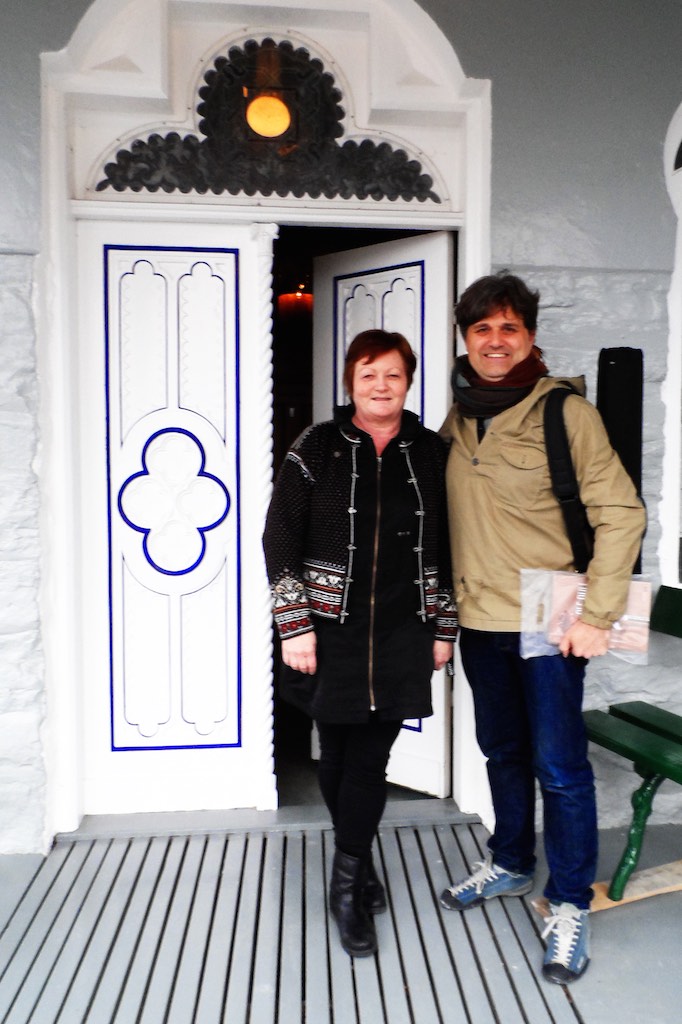
April 16th 2113 My first day back at Lysøen: I have been desperate to return since my first visit in October 2012(see Three Days In Bergen)
For now, just objects from this first day.
Ole Bull has such a long reach, from present to the past. It came as something of a shock to find his reach back to Beethoven’s collaborators. Franz Clement, who premiered the Beethoven Violin concerto, dedicated a work for solo violin to him, which I hope to see later this week. For more on Clement, go to-Barbe-Bleu
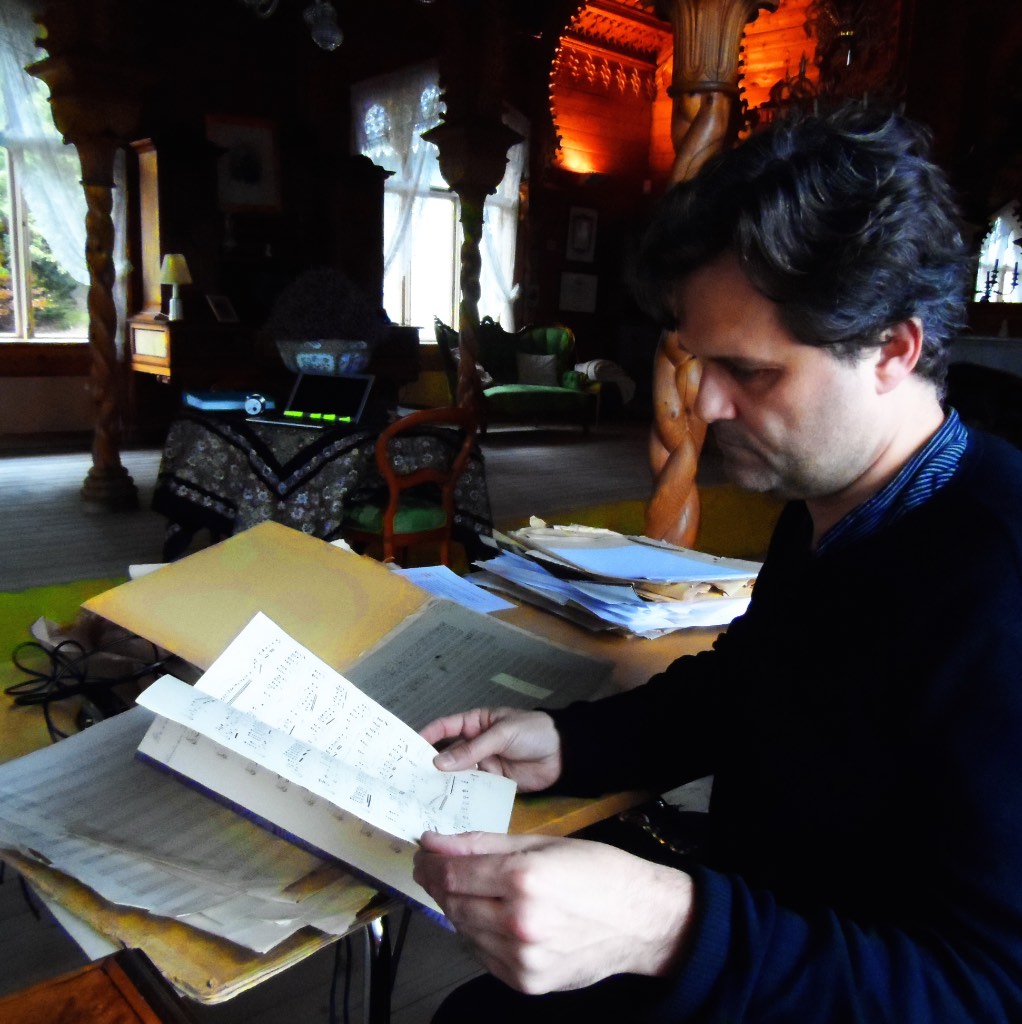
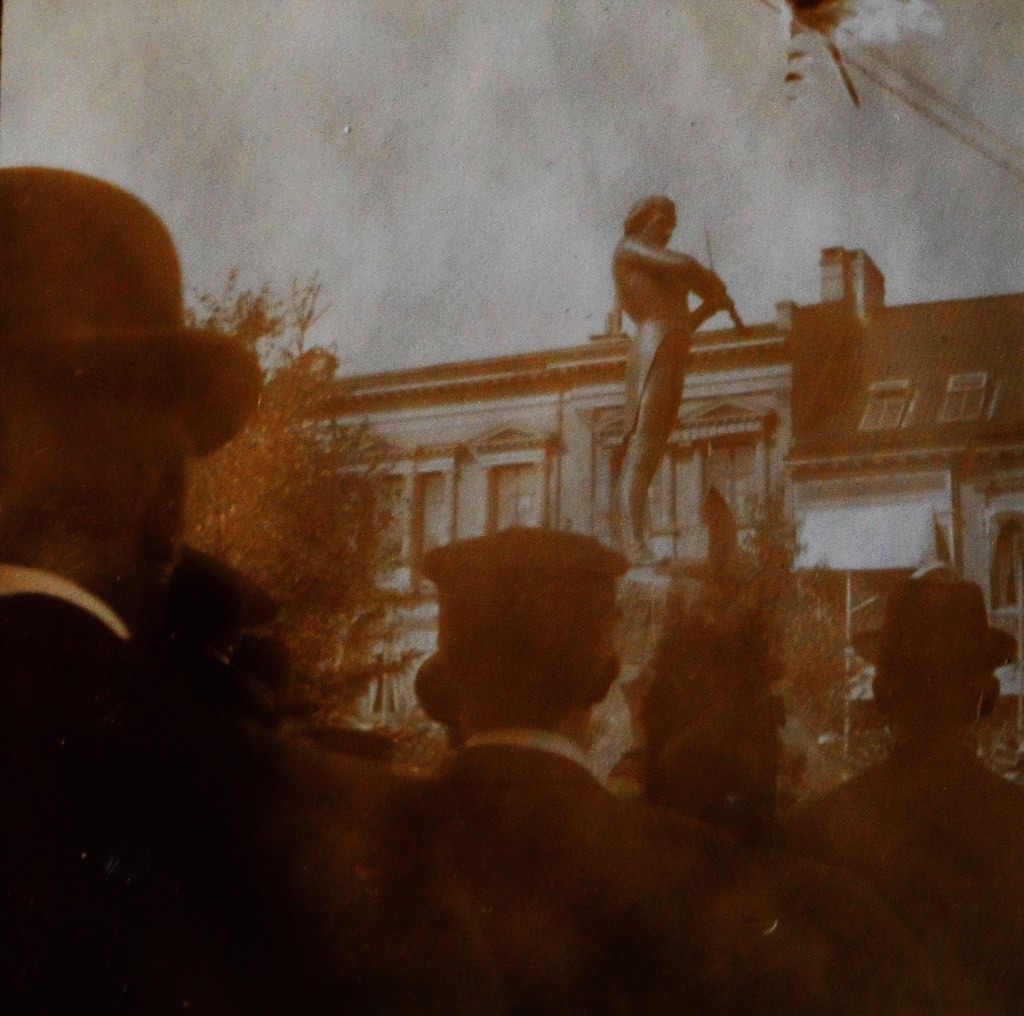
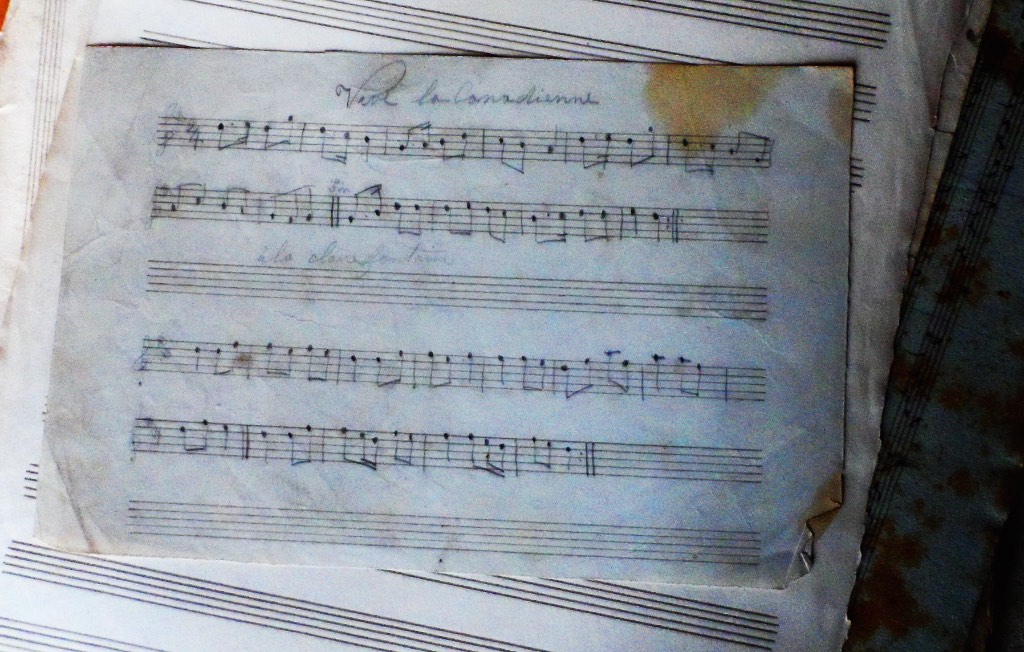
Ole Bull?-‘Vive La Comedienne’ Peter Sheppard Skaerved-Violin 16 04 2013
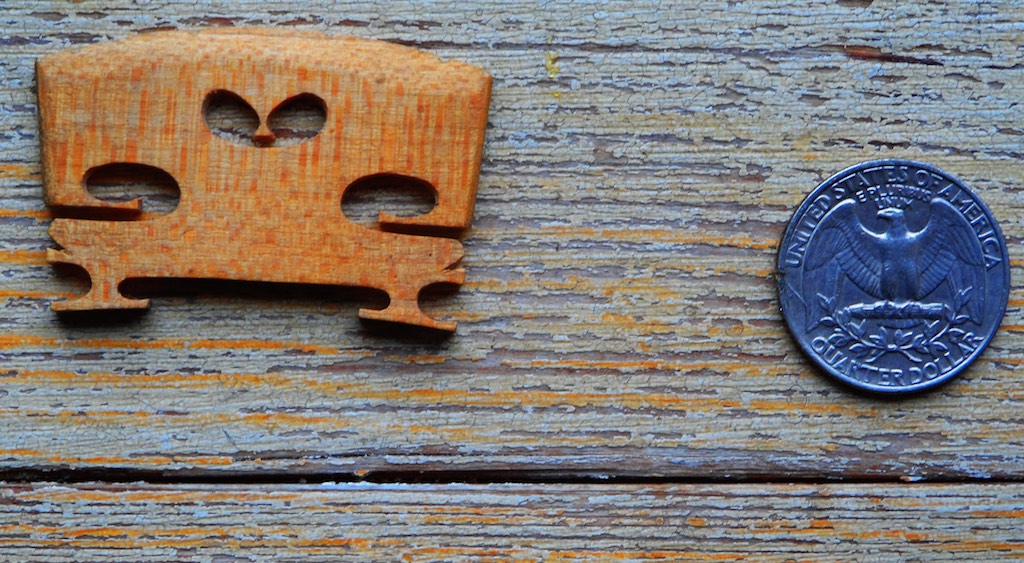
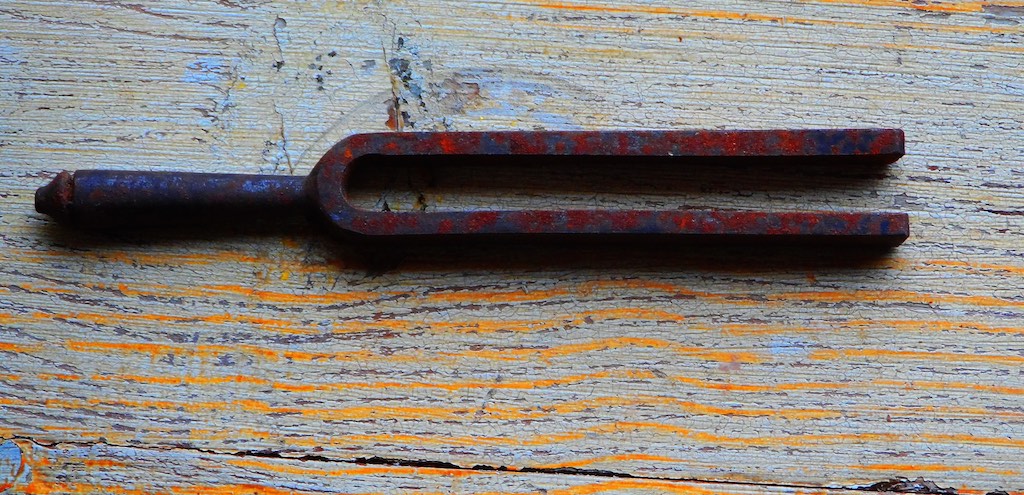
Ole Bull-a realisation of the introduction to Mozart’s ‘Dissonance’ Quartet
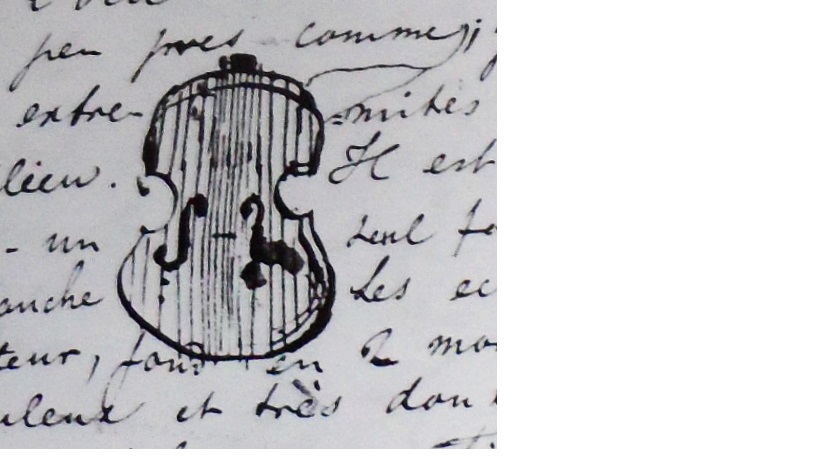
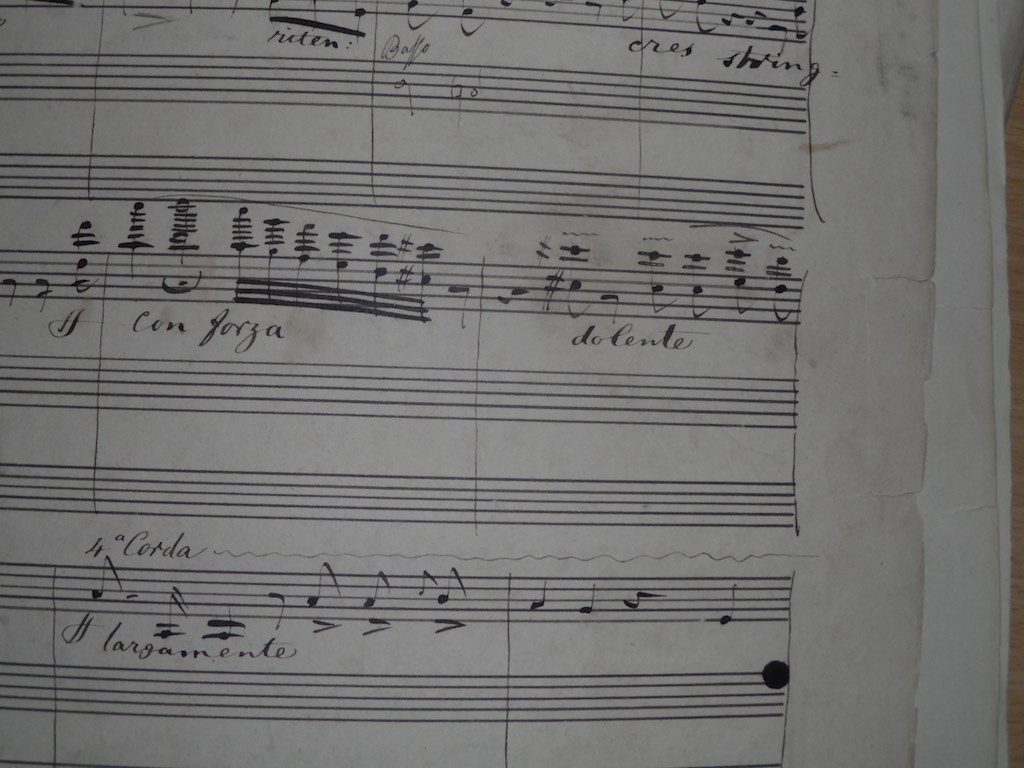
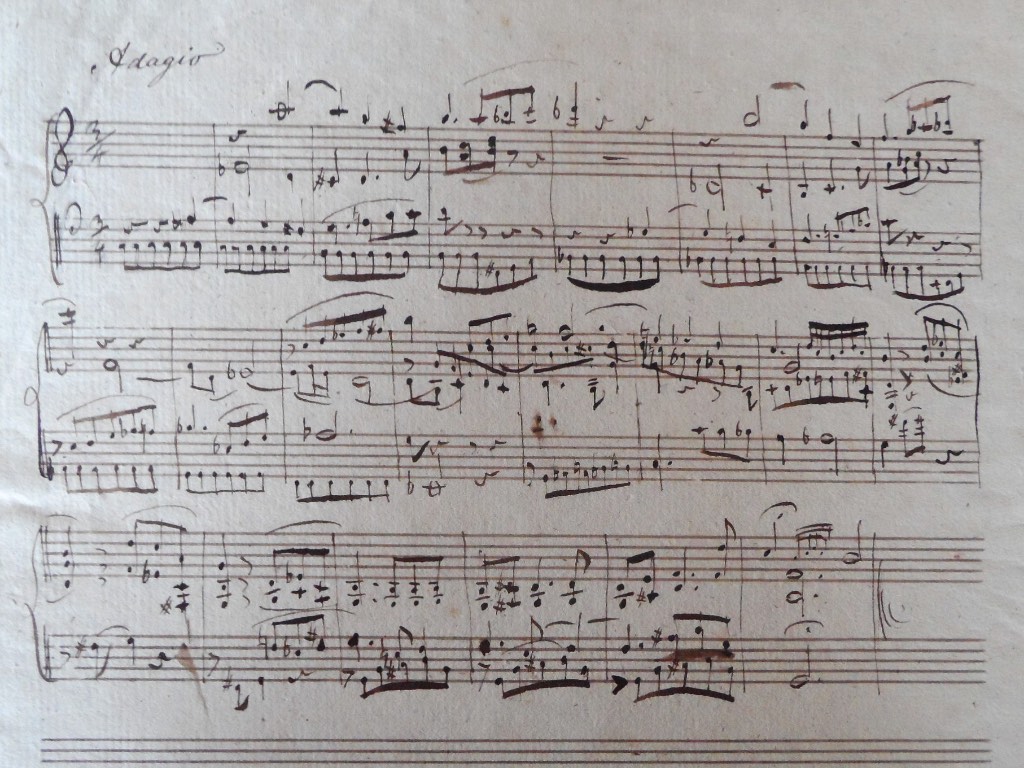
One of the loose sheets of manuscript in Bull’s hand is immediately recognisable as the famously enigmatic opening to Mozart’s C Major Quartet K 465. The harmonic ‘writhing’ (as Colin Davis would put it) of the opening to this piece led to it being known as the ‘Dissonance’. I would imagine that Bull was fascinated by this. He was a lifelong admirer of Mozart’s chamber music, but more than that, was a musical ‘inventor’ in every way. But it is perhaps important to have a mind that the use of ‘full scores’ to rehearse chamber music was a late 19th Century invention; indeed the first Partitur of this work did not appear until 1882, part of Wolfgang Amadeus Mozarts Werke, Serie XIV: Quartette für Streichinstrumente (pp.186-205), published by Breitkopf & Härtel. A well-documented result of this was that passages of harmonic complexity often caused dispute in read-throughs. Beethoven was once found at breakfast after a chamber music evening counting the bars of three part-books of the Pleyel Trio played the night before, trying to resolve just such a question. Perhaps Bull wrote this out to demonstrate to his colleagues ‘how it worked’, or just because he was curious.
April 17th Day Two
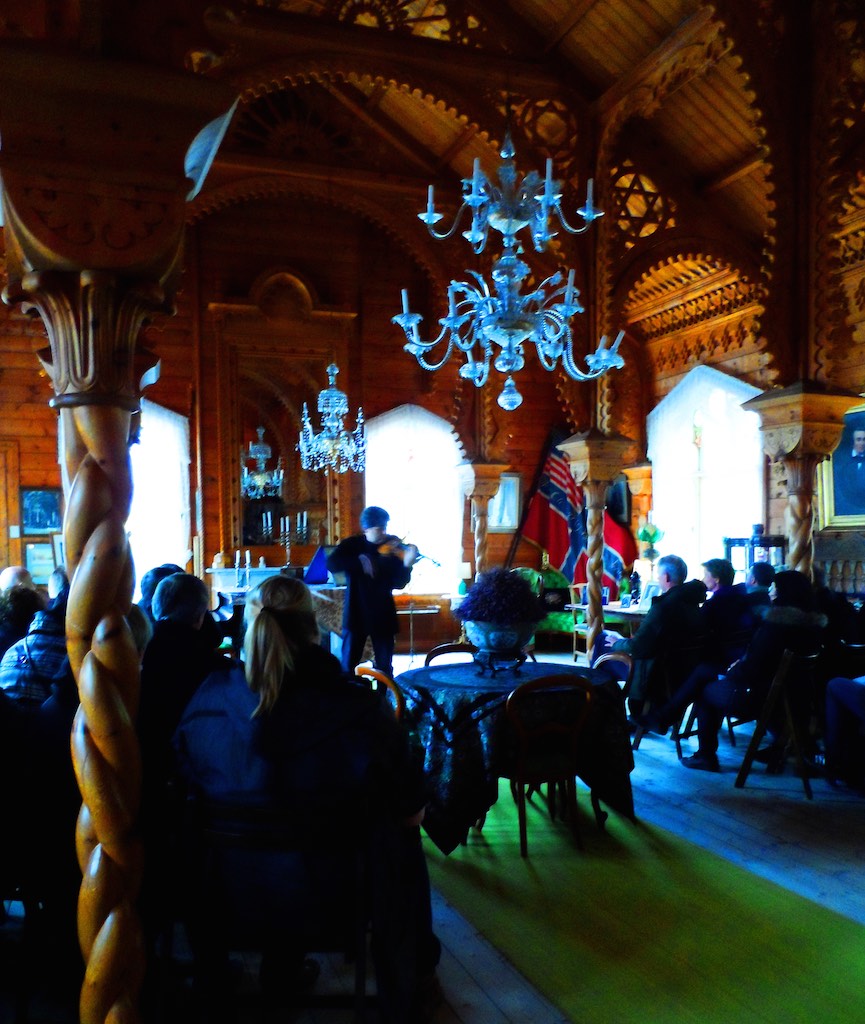
By the end of day two, I have seen over 300 hundred objects-ranging from instruments and tools to astonishing score material. Today, a solo work by Bull dedicated to Glinka. It seems that they met in Seville in 1846, and Bull insribed the solo work, a Siciliana in Glinka’s album. The inscription gives a clue as to the language gap between the two musicians, as it is in Italian.
Ole Bull-Springdands at Lysøen
On the 26th April 1866, Ole Bull was honoured by the Dansk Norsk Forening in Copenhagen. It was reported that after the toast and been exchanged and Bull honoured, the ‘Flaxen Haired Paganini’ stood quietly in the middle of the room and began to play. ‘Springdances, Hallings, burst from his violin and then he gave himself up to a free fantasy on a National Norwegian Air’.
This is one of Bull’s Springdanser, slightly embellished with the sort of improvisatory ornaments that are to be heard in his Fanitullen.
Peter Sheppard Skaerved-Violin
Workshop Recording in Ole Bull’s music room at Lysøen/ 17 4 2013
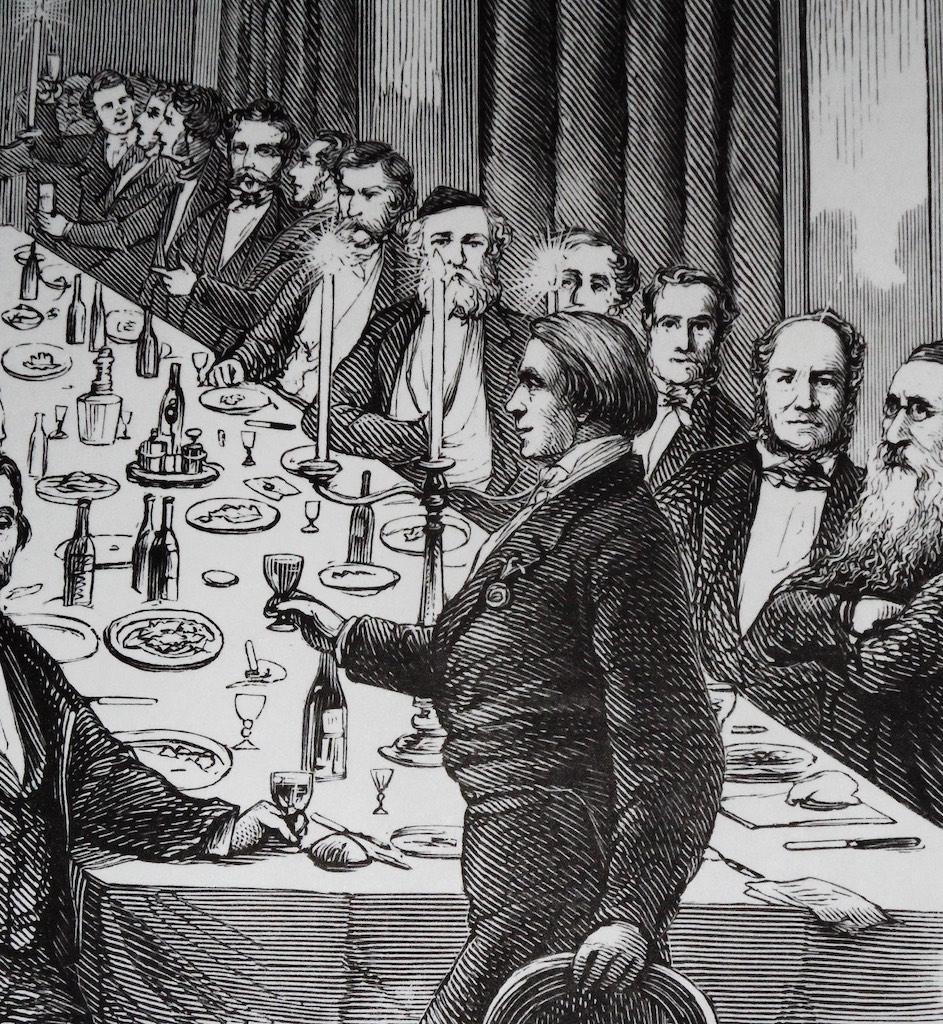

19th April: Today with extraordinary help from Jorunn E. Færden, at the music department of the Bergen Public Library, I was able to see ( and get copies) of two fascinating works from Bull’s collection. The first of these, is by a composer/violinist who has figured large in my Beethoven research and recording-Franz Clement (1780-1842).
Franz Clement-Variations on André Ernest Modeste Grétry’s opera ‘Barbe Bleu’
Peter Sheppard Skaerved-Violin (Stradivari 1734 ‘Habeneck’)
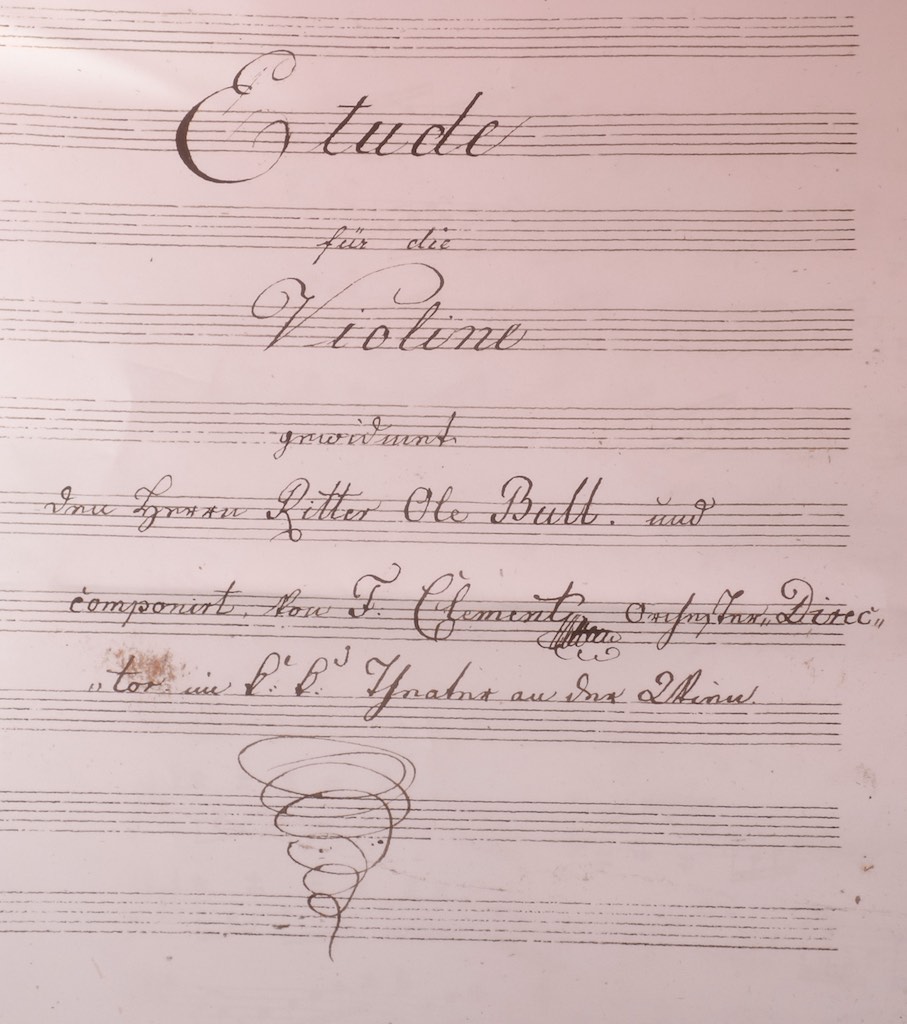
Clement is best known as the violinist who premiered ( and in some ways, helped write) Beethoven’s Violin Concerto Op 61 in 1806. I was astonished to find that he had written a piece for Ole Bull, an Etude for violin, ‘dedicated to the Knight Ole Bull’. Here is the title page, and there will be more to follow.
In addition, something to gladden the heart of any Dane, or anyone married to one. Also from Ole Bull’s collection a solo violin piece, very much in his spirit, and with a scordatura (retuning), which he would like. Over the past few days, I have become fascinated with the work of Anders Heyerdahl (1832-1918), who I first encountered through a transcription that he made of Ole Bull improvising. Heyerdahl was a violinist, composer and collector of folk musik. The solo work which I found in the Lysoen collection was Nissespel. ‘Nisser’ as every Danish child does, are the playful house elves who must be humoured and honoured at Christmas. Heyerdahl’s title page includes one playing the violin for what almost appears to be a Nisser-witches dance-there are echoes of Paganini here.

This is only a beginning, but this piece paired with a text by Ole Bull’s great friend, Aasmund Olavsson Vinje, a poem about the Nisse ‘som spila pa Fela (fiddle) og hoyra kann’. In 1857, Vinje had noted about Bull that he was a ‘marvellously unhappy man…as far as I can tell, he is not responsible for most of it’ (thanks to Einar Haugen for the quote-from his ‘Ole Bull: Norway’s Romantic Musician and Cosmopolitan Patrio’).
It was Vinje, who in 1858 published a biographical article ‘Myllarguten and Ole Bull’ which counterpointed Bull’s life with that of the most renowned of all Hardanger violinists, ‘Myllarguten’ (the miller’s son). It had been Bull who had drawn mass public attention to the ‘miller’s son’ whose actual name was Torgeir Augundsson (1799(?)-1872), who he had met for the first time sometime between 1829 and 1831.
Bruremarsch efter Moellergutten-Traditional Hardanger Melody Traditional. As performed by Knud Dahle and transcribed by Johan Halvorsen.Published by Peters Verlag as ‘Norwegische Bauerntaenze'(Slaatter) -‘wie diesselben auf der norwegischen Bauernfiedel gespielt werden’
Peter Sheppard Skaerved-Violin
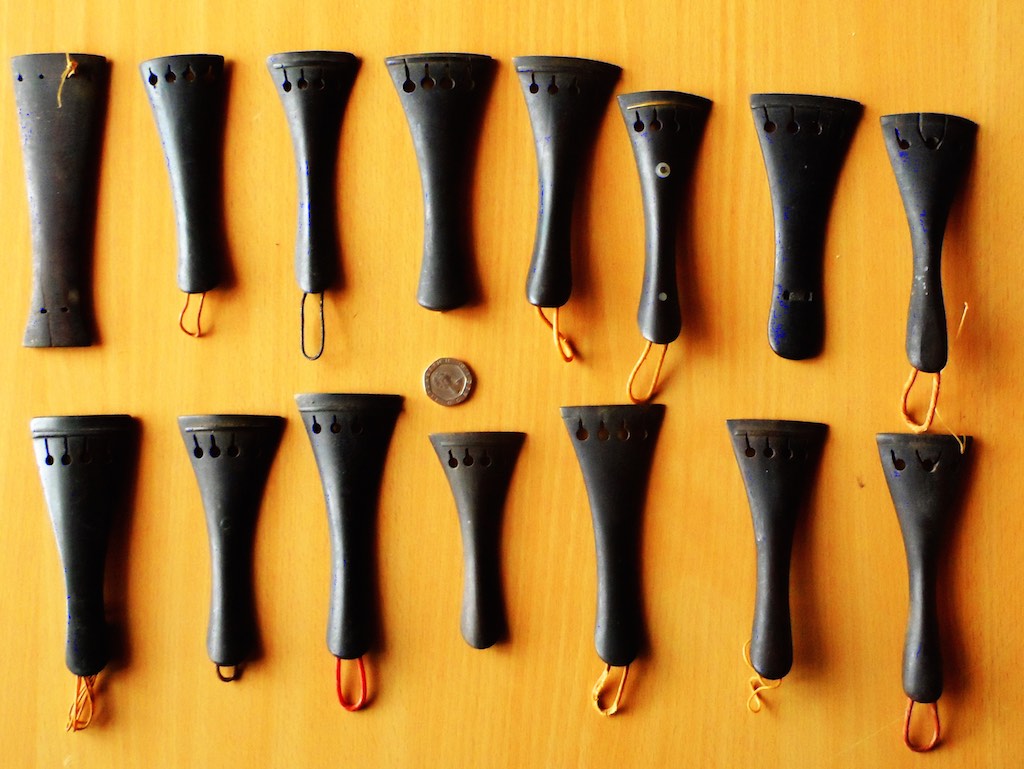
As I have noted about and on the earlier visit to the house (LINK)the plethora of instrumental fittings in the boxes in the enormous armoire from which much of the material appears is bewildering. Sorting through the array of tailpieces (see photo above), one stuck out.
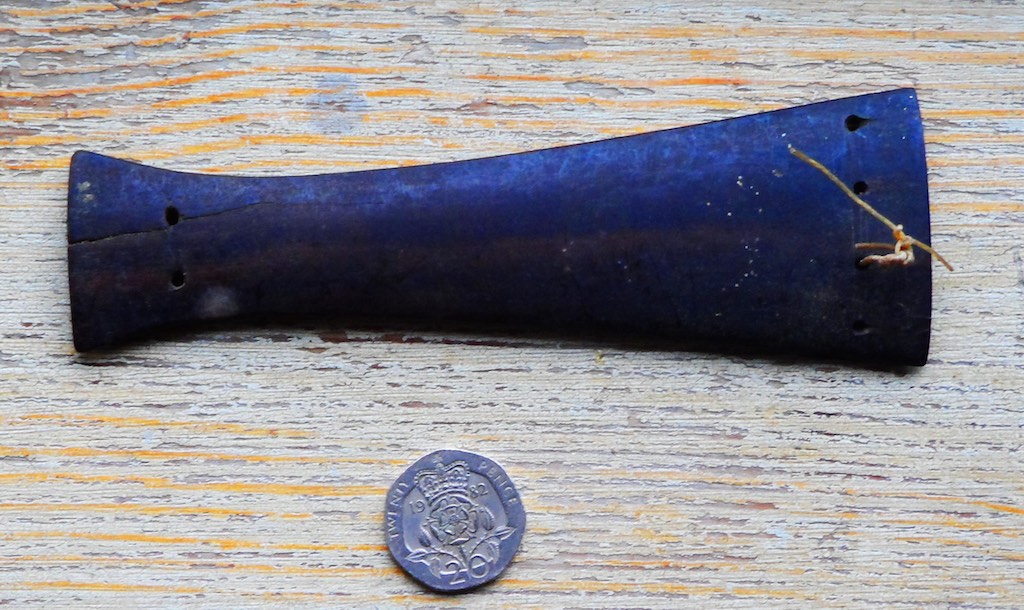
I am intrigued as to where Bull obtained this object. Today, there is a good chance that we would not give it a second glance, as early baroque style fittings are twoapenny, courtesy of the revival of the revival of understanding of early set-ups in the late 20th Century. However, this was not the case in the 19th Century. I have a nagging suspicion that this fitting was on one of the many violins which Bull bought and sold, perhaps his Nicolo Amatic violin, and is an example of mid-17th technology, cast aside and just hidden under a pile of other cast offs, in a dusty box, where I found it. this is just a first reaction, of course.